
Your Spare Parts Inventory Count Is Correct and Still Isn't Confirming Those Seals Will Work
A quarterly spares audit at an ETP or STP checks a critical spare, a pump diaphragm, a valve O-ring, a gasket set, against two things: is it physically present,..
Contents
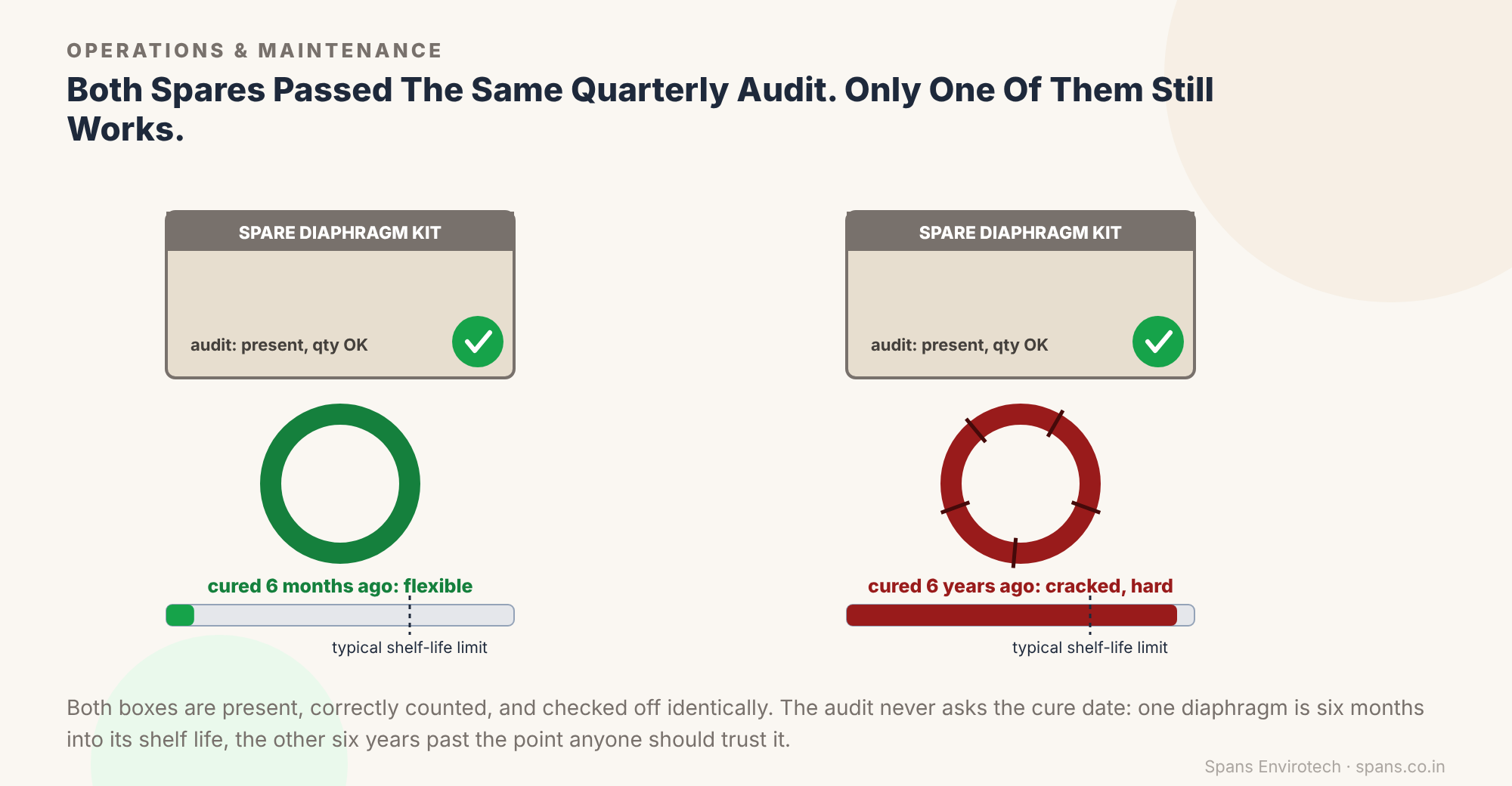
A quarterly spares audit at an ETP or STP checks a critical spare, a pump diaphragm, a valve O-ring, a gasket set, against two things: is it physically present, and does the quantity match what the spares list says should be on the shelf. Get both right and the audit passes, correctly. It does not confirm the part will actually work when it finally gets installed, because elastomer components age on the shelf from the day they are moulded, whether or not anyone ever opens the box, and a part that was genuinely correct stock a year ago can have quietly aged past safe or effective use by the time an emergency failure sends someone looking for it.
A correct stock count and a usable part are different claims
Rubber and synthetic elastomer seals, diaphragms, O-rings, and gaskets degrade through a real, documented ageing process independent of installation or use. Ozone cracking is the most visible mechanism: ambient ozone attacks the rubber's chemical structure and produces surface cracks that worsen under any mechanical stress, and the sensitivity varies sharply by compound, with natural rubber and nitrile among the more vulnerable and materials like EPDM, fluoroelastomers, and silicone considerably more resistant. The clock on this ageing starts at the material's cure date, not its purchase date and certainly not whatever date it gets installed, so a spare bought two years ago from a batch that was already three years old when it shipped is five years into its shelf life the day it arrives, a fact a stock count has no way to capture because a stock count only asks whether the part is there.
Why the audit keeps checking presence instead of condition
Counting what is on a shelf against a spares list is fast, objective, and something anyone can verify in minutes. Tracking cure date against a compound-specific shelf-life limit requires knowing which elastomer each part is actually made from, finding or estimating its cure date from a batch code or supplier record, and checking that figure against published guidance that itself varies by manufacturer, by compound, and by how carefully the part has actually been stored. Storage conditions compound the problem rather than simplifying it: a seal kept in its sealed packaging away from sunlight and ozone sources ages far more slowly than an identical part left loose on an open shelf near a motor control centre or any equipment that generates ozone through corona discharge, so two spares bought on the same day, with the same cure date, can be in genuinely different condition purely because of where each one was stored. None of that shows up on a quarterly count, because a quarterly count was never built to ask it.
This is the same shape of mistake we described in the piece on spare parts lead time risk: a spares programme can get the procurement side completely right, ordering early enough, holding the correct quantity, and still fail the actual question that matters at the moment of failure, because quantity on the shelf and condition on the shelf are different things the same audit was never designed to distinguish. It is close kin, too, to the piece on dosing pump drawdown testing versus diaphragm wear: a diaphragm installed and running can look correctly specified while wearing quietly, and a diaphragm sitting as a spare can look correctly stocked while ageing quietly, the same gap between a paperwork-correct status and an actual physical condition, just on opposite sides of the installation.
Picture a plant that keeps a correctly maintained critical-spares list for its coagulant dosing pumps, including a spare diaphragm and a set of check-valve seals, replenished on schedule and verified present at every quarterly audit for six straight years. The diaphragm was moulded from a nitrile compound with a shelf life commonly cited around a decade under good storage, comfortably inside its window on paper, except it was stored loose on an open shelf a few metres from a motor control centre for most of that time, and ozone from the switchgear has been quietly attacking the rubber the entire six years nobody had any reason to look closer than confirming it was still sitting there. When the duty pump's diaphragm finally fails and the spare goes in, it cracks and fails within days, and the plant discovers, at the exact moment the spare was supposed to prevent downtime, that correctly stocked and actually usable had stopped meaning the same thing years earlier.
The practical fix costs very little against what a failed emergency spare costs in unplanned downtime, a figure worth weighing against any realistic project cost estimate for the plant, especially for dosing and seal components tied directly to compliance-critical processes where a failed spare means a real gap in treatment rather than just an inconvenience. Recording the cure date (from the batch code, not the purchase date) on receipt, setting a compound-specific expiry against supplier data or a standard reference table rather than one blanket figure for every elastomer in the store, and applying first-expired-first-out rather than simple first-in-first-out rotation for anything with a defined shelf life, turns a presence check into an actual condition check. Storing elastomer spares in their original sealed packaging, away from direct sunlight, and physically apart from any equipment that generates ozone, protects the part itself rather than just the paperwork describing it.
What actually confirming a usable spare requires
The fix is not distrusting a spares audit that correctly confirms stock levels, which remains a necessary check on its own terms. It is adding a second, separate question the audit was never asking: given this part's actual compound and cure date, and how it has actually been stored, is it still inside a usable shelf-life window, or has paperwork correctness quietly outlasted physical usability. For the small number of elastomer components that genuinely matter at the moment of an unplanned failure, dosing pump diaphragms, critical valve seals, pump seal kits, that question is worth building into the same spares programme that already tracks lead time and reorder points, rather than discovering the gap the one day an emergency actually calls on the spare.
If your plant's critical spares programme tracks quantity and reorder points without tracking cure date or storage condition for its elastomer components, that gap is worth closing with Spans' operations and maintenance team before a spare that passed every audit on record turns out to have aged past usable years before anyone needed it.
Spans
Spans empowers businesses around the world to grow faster and profitable while using less energy and water.
Visit Site